
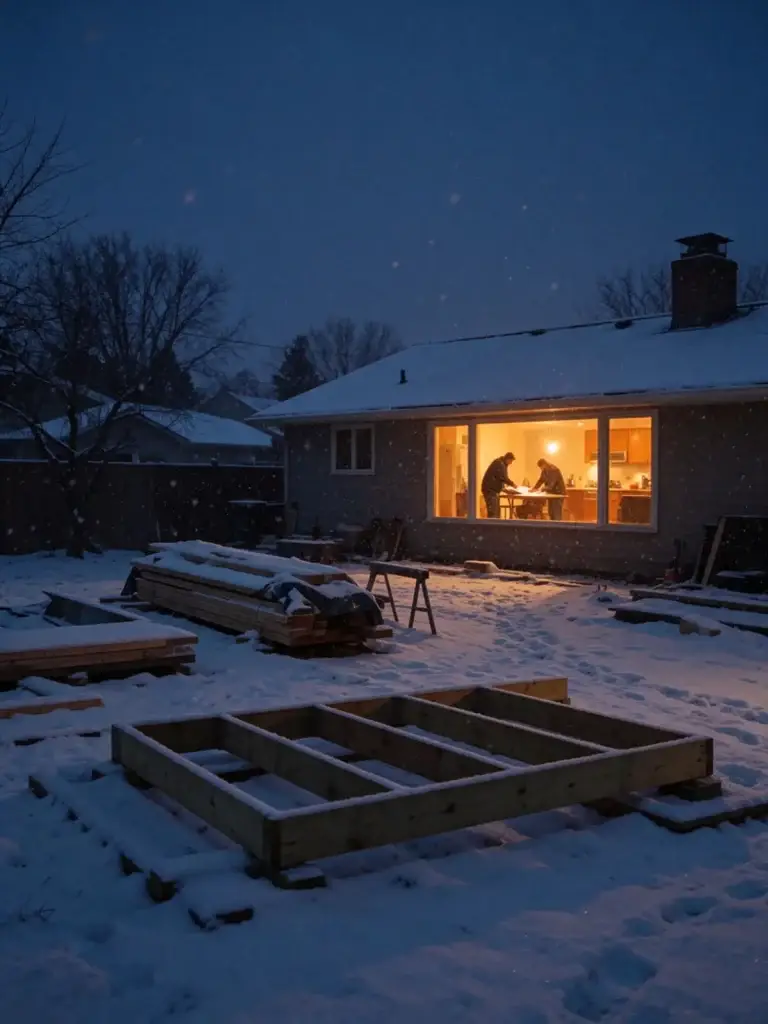
Home improvement and outdoor work runs on a brutal seasonal curve. Demand arrives in a rush, everyone is too busy to market, the season ends, and the marketing restarts from cold in February. The companies that break the cycle are not working harder in June. They published in January, and by the time the phones rang they were already ranking.
Demand shape
Publishing window
Decision length
What closes it
Search visibility takes months to build, and seasonal contractors reliably start building it the week demand arrives. By the time a page ranks the season is over. The companies that dominate a market are the ones that treated January and February as the production months, so that the content, the pages and the profile were already working when the first warm weekend hit.
The second problem is that this category spans wildly different purchases under one roof. A window replacement is a considered, expensive, months long decision. A lawn treatment is a recurring service bought on convenience. An outdoor living build is closer to construction. Companies that do several of these usually market them all the same way and underperform in every one.
◆
Google Business Profile configured for how this work is actually searched, with correct categories, honest service areas and seasonal hours that change when your operation does rather than staying frozen year round.
◆
A content calendar built backwards from your season, so the pages that need to rank in April are published in January. This single change is what separates the companies that own a market from the ones that chase it.
◆
Separate treatment for separate purchases. Windows and doors, landscaping, hardscape and outdoor living, lawn care. Each has its own buyer, its own decision length and its own page, rather than one services page trying to cover all of it.
◆
Project documentation, because outdoor and improvement work photographs extremely well and almost nobody is capturing it systematically. Before and after on real jobs is the most persuasive asset available in this category.
◆
Review velocity timed to the season, so the reviews arrive while customers are delighted and the profile shows recent activity heading into the months that matter rather than trailing behind them.
◆
Town pages for the places you genuinely serve, built on real local detail. Proximity matters here and honest coverage beats claiming a county you would never actually drive to.
◆
AI search visibility, because homeowners now ask an AI what a project should cost and who does it well nearby. Those answers cite a few detailed sources and specificity is how you become one.
◆
Organic social that runs through the off season rather than stopping with the work. Staying visible in the quiet months is how you are the first name remembered when the season turns.
We plan the work before the busy season hits, so you are already showing up when homeowners start searching.
We pull your visibility by service and town, your profile, your reviews and what the two companies that own your season are doing differently. You get the findings whether or not you hire us.
Categories, service areas, seasonal hours, photos and services. It is the cheapest win available and for seasonal businesses the hours and activity signals are almost always stale.
Site speed, image handling, schema and mobile experience. These sites carry heavy project photography and most of them load badly on the phone where the homeowner is looking.
Service pages, town pages and seasonal content published in the quiet months so it is ranking before demand arrives rather than starting from cold when it does.
Rank tracking by service and location, reporting split by service line, and a plan that shifts with the season instead of running the same way in January and July.
In your slow season, which feels counterintuitive and is the whole point. Visibility takes months to build, so work started in the quiet months is ranking when demand arrives. Starting in your busy season means paying for something that arrives after you needed it.
One site, separate pages. Windows, landscaping and lawn care are different purchases with different buyers and decision lengths, and a single services page serves none of them. Separate pages, shared profile and shared reviews.
Publish and post through it. It costs almost nothing in a quiet month and it is the entire reason a company is the first name remembered in spring. The ones that go dark in November restart from cold every single year.
Ranges, where you can. Home improvement buyers filter hard on budget and hiding it does not stop them filtering, it just removes you from the comparison. Ranges cut the enquiries you did not want and improve the ones left.
No, and that is the trap. Lawn care is recurring, convenience driven and decided quickly, so it leans on the profile and reviews. Window replacement is expensive and slow, so it leans on content and proof. Same company, two different approaches.
Only for the towns you will genuinely drive to, and only if each page says something real about that town. Ten honest pages beat sixty templated ones, which Google has been discounting for years and now openly penalizes.
Profile and review work can move inside weeks. Service and town pages build from there and compound. In a seasonal business the honest measure is not months, it is whether you are ranking before the season rather than during it.
You go back to the cycle. Rankings drift, the profile decays, and next spring starts from cold again. The companies that pull away in this category are not doing anything clever, they simply never stop.
The first call is thirty minutes and free. You will get a straight read on where you rank across the towns you serve, how ready you are for the months that actually matter, and what it is costing you, whether or not you end up hiring us.