
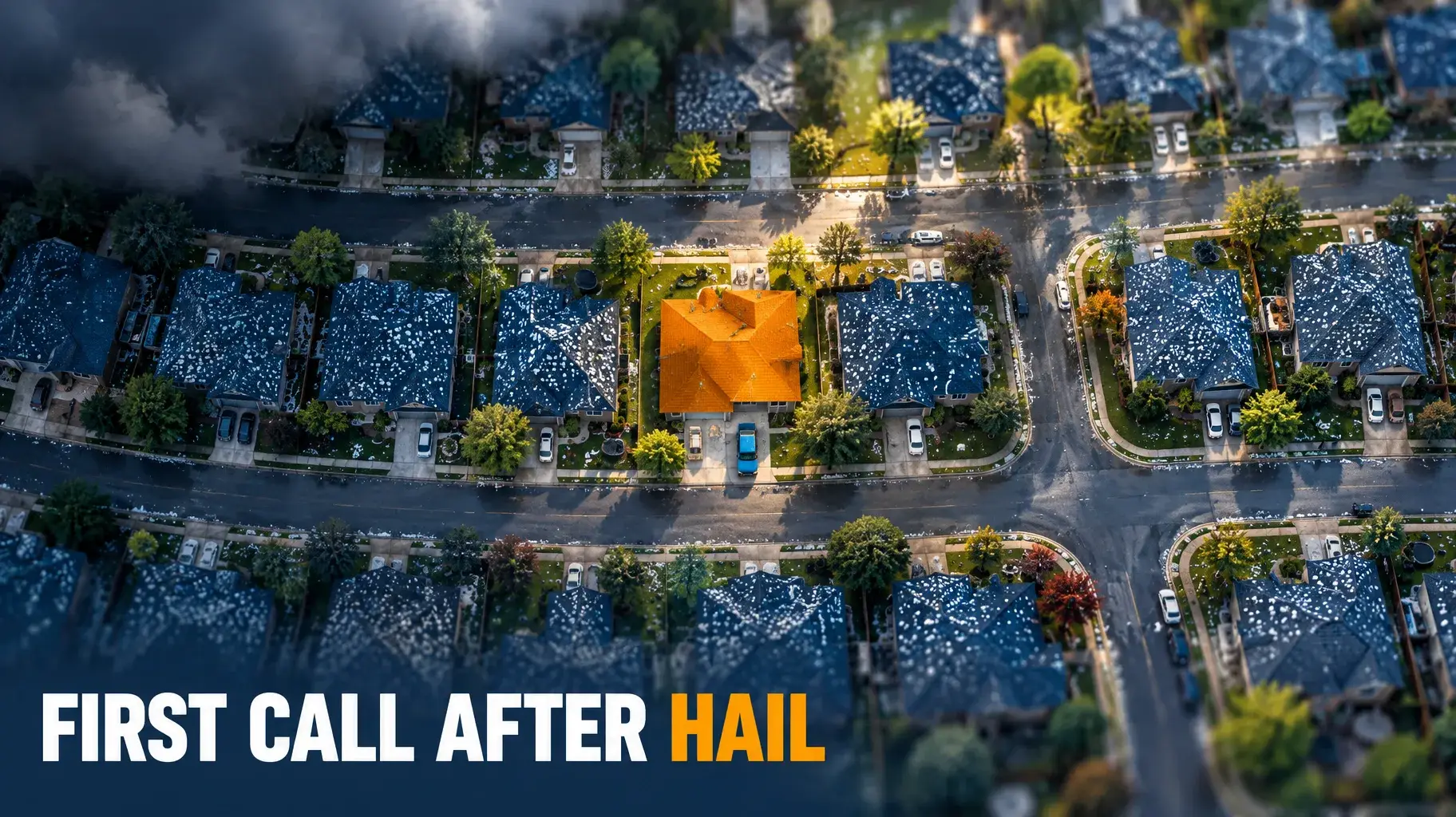
The hail stops at 4:40 in the afternoon. By 5:00, half the neighborhood is outside looking at dented gutters and shredded siding, and by 5:15 they are on their phones searching “roof repair near me.” Whoever shows up in those results gets the inspection. Everyone else gets the leftovers. That is roofing SEO in one sentence.
Roofing is a strange business to market, and roofing SEO has to account for that. Demand is lumpy, tied to weather you cannot control. Jobs are big, so every lead matters. And the industry has a reputation problem, thanks to storm chasers who roll into town after a hailstorm, knock on doors, and vanish before the warranty paperwork dries.
This playbook is built for local roofing contractors who plan to be around for the next storm, and the one after that. We will cover storm season, service pages, city pages done the right way, Google Business Profile, project photos, reviews, and AI search. If you have read general advice about SEO for contractors, this is the roofing specific version.
Why roofing SEO is different from other contractor SEO
Most home service businesses have fairly steady demand, so their SEO can run at an even pace. Plumbers get calls every week of the year. Roofers get long quiet stretches, then a single storm that produces months of work in one afternoon.
That changes how roofing SEO should be planned:
- You need to be visible before the storm. Rankings take months to build. If you start working on them the week after a hailstorm, you have already missed it.
- Search intent swings hard. On a calm day, people search “roof replacement cost.” After a storm, they search “hail damage roof inspection” and “roofer who works with insurance.”
- Trust is the deciding factor. Homeowners have heard the storm chaser stories. They want proof you are local, licensed where required, insured, and still answering the phone two years from now.
- Jobs are expensive. A single replacement can be worth more than a month of marketing, so even a modest lift in calls adds up fast.
Here in Colorado, hail season is not a theory. The Front Range sees hail most years, and a roofer whose website and profile are already strong when the storm hits will feel the difference immediately.
Build service pages that match how homeowners search
The most common roofing website mistake we see is one “Services” page that lists everything in a single paragraph. Google cannot rank one page for six different problems, homeowners do not want to dig, and your roofing SEO stalls before it starts.
Strong roofing SEO starts with a dedicated page for each service you want leads for:
- Roof repair, covering leaks, missing shingles, flashing, and emergency tarping.
- Roof replacement, covering materials, the process from tear-off to cleanup, timelines, and what affects cost.
- Storm and hail damage, covering what damage looks like, why some of it is hard to see from the ground, and what happens during an inspection.
- Insurance claim help, covering how you work with homeowners and adjusters, what documentation you provide, and what the homeowner is responsible for.
- Commercial roofing, if you do it, covering flat and low-slope systems, maintenance programs, and the types of buildings you work on.
- Gutters, siding, or skylights, if they are real parts of your business.
What a good roofing service page includes
For roofing SEO, each page should answer the questions your estimators hear on every inspection. Include the process step by step, the materials and brands you install, your warranty terms in plain English, photos of your own work, and a clear way to book an inspection. If you hold manufacturer certifications, say which ones and what they mean for the homeowner.
On insurance pages, be careful with your wording. Promising that you will “get your roof paid for” or offering to cover a deductible can create legal problems in some states, and it sounds exactly like the storm chasers homeowners are trying to avoid. Explain how you help. Do not promise outcomes you do not control.
City and service area pages, done right
Every roofing company wants to show up in the towns around its home base. The lazy way to do it is to take one page, swap the city name 40 times, and publish. Google calls these doorway pages, and they tend to hurt more than help.
The better approach for roofing SEO is fewer, stronger location pages, built only for areas where you genuinely work. A good one includes:
- Real projects in that area, with photos and a short description of each job (with the homeowner’s permission, and without exact street addresses)
- Local conditions, such as notable hail events, common home styles, typical roof ages, or HOA requirements in specific neighborhoods
- Local reviews from customers in that city
- Local details that matter, like permit requirements or which crew covers that area
Location pages are where roofing SEO either builds trust or burns it. If you cannot write a page about a town that is meaningfully different from the others, you probably do not need that page yet. Start with the five or six areas that produce the most work and expand from there.
Google Business Profile for a roofing company
For most roofers, Google Business Profile is the single biggest source of calls from search. It is also where roofing SEO goes wrong most often, because roofers usually do not serve customers at their office.
That makes most roofing companies service-area businesses in Google’s eyes. According to Google’s help page on managing service areas, if you do not serve customers at your business address, you should remove that address from your profile and list the areas you serve instead. The same page notes that your overall service area generally should not extend beyond about two hours of driving time from where your business is based.
A few more rules of thumb for a roofer’s profile:
- Pick “Roofing contractor” as the primary category, then add secondary categories that match real services, like gutter or siding work.
- Use your real business name. Adding “Best Hail Damage Roofer Denver” to the name violates Google’s guidelines and invites a suspension right when you need the profile most.
- Do not create profiles at fake addresses to appear in more towns. Mailbox stores and virtual offices are a common cause of suspensions.
- Post during storm season. Short updates about inspection availability after a storm keep the profile active and give searchers a reason to call.
- Add new photos regularly, ideally from real jobs, with crews and trucks visible.
Project photo galleries with real locations
Photos are where roofers have an advantage most businesses do not. Your work is big, visual, and outdoors. A before and after shot of a hail-beaten roof turned into a clean new one does more selling than any paragraph.
Turn that into roofing SEO value:
- Build a project gallery on your website, organized by service and by city.
- Write a short caption for every project: the town, the service, the material, and the problem you solved. For example, “Full replacement after hail damage in Parker, architectural shingles, completed in two days.”
- Use descriptive file names and alt text instead of “IMG_4471.jpg.”
- Link projects to the matching service and city pages so each page has proof attached.
- Share the same photos on your Google Business Profile and social channels.
A gallery like this gives Google, AI tools, and homeowners the same message: this company really works here, and here is the evidence.
Reviews and the storm chaser problem
Reviews matter in every local business, but in roofing SEO they carry extra weight. Homeowners use them to answer one question: is this a real local company, or someone who will disappear after the check clears?
Build a review habit that runs all year, not just after big storms:
- Ask every customer at the end of every job, while the crew is still packing up and the homeowner is happy.
- Send a direct review link by text the same day, and a single follow-up a few days later.
- Encourage customers to mention the service and the town in their own words. Do not script it for them.
- Respond to every review, including the bad ones, calmly and specifically.
Then go further to separate yourself from storm chasers. Show your physical location, how long you have been in business, your license or registration where your state requires one, your insurance, and your warranty terms. Put team photos on the site. Mention the local organizations you belong to. A storm chaser cannot fake ten years of reviews from the same three counties, and that history is a quiet but real part of roofing SEO.
Roofing SEO and AI search
Homeowners are starting to ask AI tools questions like “who is a reliable roofer for hail damage in Castle Rock?” The answer is usually a short list of names, and being on it depends on whether AI tools can find clear, consistent, trustworthy information about your company.
What tends to help:
- Consistent business details across your website, Google Business Profile, Bing Places, Apple Maps, and roofing directories
- Service pages that answer questions directly, with a plain answer in the first few sentences
- Reviews that mention specific services and towns, since AI tools summarize what customers say
- Mentions on credible sites, like manufacturer contractor locators, local news coverage, and community organizations
- Structured data (schema markup) that labels your business type, services, and service areas
Nobody can guarantee an AI tool will recommend you. Solid roofing SEO simply makes you the easiest company to understand and the safest one to suggest.
Your storm season roofing SEO calendar
Weather does not care about your marketing calendar, so plan your roofing SEO around it:
| Season | Focus |
|---|---|
| Winter (off-season) | Build and improve service and city pages, organize project galleries, clean up directory listings |
| Early spring | Refresh your Google Business Profile, publish storm preparation content, line up your review process |
| Storm season | Post inspection availability, respond fast to every lead, add new project photos weekly |
| Late summer and fall | Publish storm recap content, push for reviews from storm season customers, plan next year’s pages |
The roofers who win storm season usually did their roofing SEO homework in January.
Frequently asked questions
How long does roofing SEO take to work?
Most roofers see early improvement in Google Business Profile visibility within a few months if the profile had clear problems. Ranking organic pages for competitive terms like “roof replacement” in a larger metro can take six months to a year or more. That is why timing matters: the work you start in the off-season is what pays off when storms hit.
Is SEO for roofers worth it compared to buying leads?
Bought leads are often shared with several other roofers, so you are racing competitors for the same homeowner. Roofing SEO builds an asset you own: calls from people who found you specifically. It takes longer to start working, but it does not stop when you stop paying for a lead. Many roofers use both while their organic visibility grows.
Should my roofing company list a street address on Google?
Only if customers actually visit that address during your listed hours. Google’s guidance says service-area businesses that do not serve customers at their location should hide the address and list the areas they serve instead. Most roofing companies fit that description. Listing an address you do not staff, or a mailbox store, risks a suspension at the worst possible time.
How many city pages should a roofing website have?
As many as you can make genuinely useful, and no more. Start with the five or six towns that produce the most work and give each one real projects, local reviews, and local details. Dozens of near-identical pages with the city name swapped tend to be treated as doorway pages, which can drag down roofing SEO across the whole site.
What should I do with my website when a big hailstorm hits?
Update your homepage and storm damage page with current inspection availability, post the same update on your Google Business Profile, and make sure your phone and forms are answered quickly. Do not suddenly publish a dozen new pages or make wild claims about insurance. Speed and clarity win storm week. The heavy lifting should already be done.
How do I get more reviews for my roofing business?
Ask every customer at the end of every job, in person, then text a direct review link the same day. A single polite follow-up a few days later catches most of the rest. Never pay for reviews or write them yourself. Respond to every review so future customers see a company that pays attention, especially after storm season.
Do roofing directories help roofing SEO?
They help in supporting ways. Consistent listings on major directories, manufacturer contractor locators, and local business associations confirm your name, address, and phone details for Google and AI tools. Some send real leads too. They rarely move rankings much on their own, so focus on a handful of reputable ones and keep every listing consistent.
Can a small roofing company compete with big regional roofers in search?
Yes, especially in the map pack and in specific towns. Big companies often have broad, generic websites. A smaller roofer with strong local pages, real project photos from each town, a well-run Google Business Profile, and steady reviews from nearby homeowners can outrank them where it matters. Roofing SEO rewards proof of local work, not company size.
Should I write blog posts for my roofing website?
A few good ones, yes. Useful topics include signs of hail damage, how insurance inspections work, comparing shingle types for your climate, and what a roof replacement day looks like. Each post should answer a real homeowner question and link to the matching service page. Skip generic filler; it rarely ranks and adds nothing for customers.
How do I know if my roofing SEO is working?
Track calls, form submissions, and inspection bookings by source, and record which ones turn into signed jobs. Call tracking on your website and Google Business Profile shows where leads come from. Rankings and traffic are useful early signals, but the real measure is whether search produces inspections and contracts, especially compared to the same season last year.
Let’s get your roofing SEO ready before the next storm
The roofers who get the calls after a hailstorm are rarely the ones who scrambled that week. They built strong service pages, honest city pages, a well-run Google Business Profile, and a steady stream of reviews long before the clouds rolled in.
That is how we approach roofing SEO at Two Dope Labs Media: practical work, built around the jobs you actually want, measured by inspections and signed contracts. If you want to see what that could look like for your company, take a look at our SEO and search visibility services and reach out. We will tell you honestly what we see and what we would fix first.